
Estimating Cost to Build a Home in Colorado
How to use 'cost per square foot' to estimate the cost to build a custom home in Colorado
Understanding Cost Per SF
During the early stages of a custom home project, you’ll often hear builders and architects reference a “cost per square foot.” This metric is commonly used to estimate construction costs at the early stages of planning a project. Many homeowners aren’t aware of what factors influence this number. It’s important to remember that cost per square foot is only a starting point. At the beginning of the design process, there are simply too many unknowns for the figure to be highly precise. Still, it offers a useful framework for early conversations about budget and expectations. It helps you perform a quick gut check on the feasibility of a project and can quickly reveal whether your vision aligns with your target budget.
Architects and builders might seem to casually throw these numbers around, but as you'll see there are many nuances we factor into this. The best way to make sure the numbers you're hearing are realistic is to make sure you're talking to professionals who have experience in the type of site and level of quality you're looking for. Relying on numbers from a lower grade builder with wishful thinking you can get them to the quality you want is setting yourself up for disappointment.
When doing a construction project there are three areas of costs that add up to a total project budget.
Hard costs – The cost of material and labor to build your home.
Soft costs – permit fees, architectural fee, general contractor’s fee, structural engineering are all soft costs.
Property cost – This is the purchase price of the property.
When talking about cost per sf, we’re only talking about the ‘hard cost of construction’. Soft costs and property cost are separate of this and should never be included in the price per square foot. Now that we have a high level definition for the ‘cost per square foot,’ let’s look at a few factors in our local climate that influence the numbers we use.
Factors unique to our work
Below are several factors that greatly impact the cost of construction and are unique to the type of work we do in our location. Look at our PROJECT page for examples of the type of work we do and their locations.
Regional Location
We live and work along Colorado’s Front Range, with Boulder as our home base. Building here is more expensive than most parts of the country. The higher cost of living directly impacts construction costs. If you’re building in another region, say, North Carolina, these numbers won’t apply.
Construction Quality
We partner with builders who share our commitment to craft and precision. Our projects emphasize high performance, energy efficiency, and a strong relationship between home and site. The cost to build a quality home is always going to be higher than a poorly built, production home.
Architectural Style
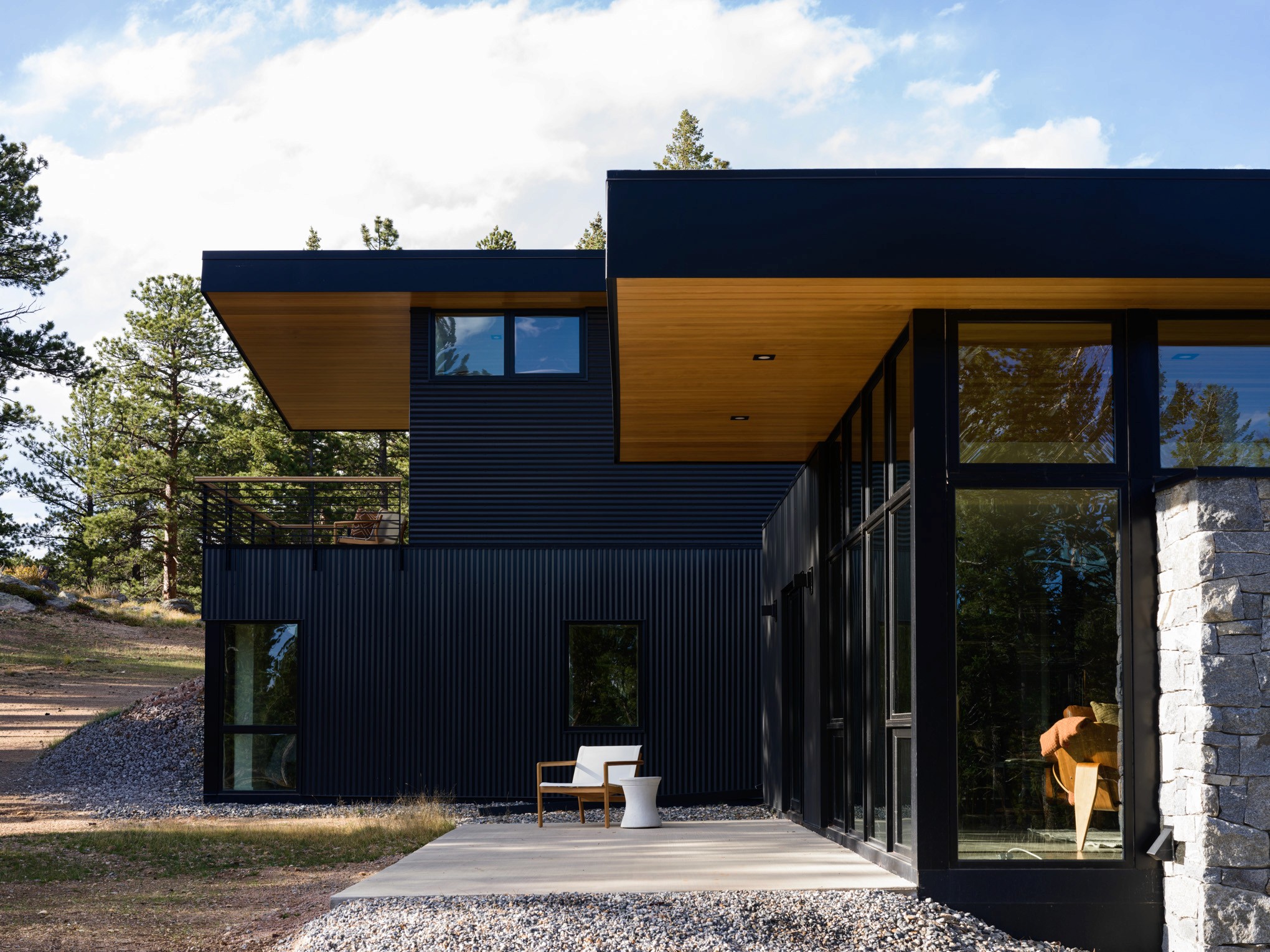
Lastly, we design modern homes grounded in the mountain landscape, using warm woods, natural materials, and large expanses of glass to frame the surrounding views. Our cost data reflects this aesthetic.
Why Is Cost Per Square Foot So Hard to Determine?
Simply put, there are a lot of unknown variables before starting the design process. Often, someone reaches out asking what a “typical” cost per square foot might be in our area. Usually, they haven’t purchased land, the design hasn’t been determined, and the size is unknown. With so many moving parts, it’s impossible to give a definitive answer. Below are some of the key factors that influence construction cost and are unique to the specific property for the project.
Site Location
Some sites are easily accessed from town, while others are remote, requiring longer travel times and more effort for deliveries. If your property is deep in the mountains, every subcontractor will account for additional time, fuel, and logistics.
Site Access
If a driveway already exists, site development costs will be lower than if you need to carve a new mile-long driveway into a steep mountainside.
Terrain
A home built on a rocky mountainside will always cost more than one on a flat or gently sloping lot. Terrain complexity can translate directly into a complex foundation design that drives the development cost up.
Utilities
How far from the building site is access to electrical service? Will your property require a well for water? Is city sewer available or will you need a septic system? What about gas? If your property is located in a city with access to utilities, you will spend less than having all the utilities installed on an undeveloped piece of land.
Other factors
Some projects have unique requirements that affect the cost per sf. Extensive landscape design, pools, complicated audio/visual systems, and elevators fall into this category. It’s important to relay these unique requirements to your architect and builder when discussing project costs.
Because these elements of each specific property so heavily influence cost to build, it can be helpful to have a professional on your side during the property search. We offer pre-design consulting services for property reviews and feasibility studies to help set you up for success and avoid surprises after you already own the property. CONTACT US to learn more.
Material Quality Tiers
The other major driver of cost is what we call ‘material quality’. For example, a home finished entirely in painted drywall interiors will cost far less than one finished in white oak tongue-and-groove. Both can be beautiful, but they belong to different cost tiers. Below is a simplified overview of the tiers we reference when discussing cost per square foot with potential clients:
Below $450 / SF
It’s extremely difficult to build a custom modern mountain home in Colorado for under $450 per square foot. While a hands-on, self-built project might make this possible, it’s rarely realistic for professional construction. You might be able to finagle your way to these lower numbers, but it will take serious ingenuity with unique materials and an extremely efficient structure on a relatively flat, easy to develop property. In other words, I wouldn’t count on it.
* You might come across a builder that will tell you this is possible. However, this is only realistic for low quality, production style home builders. Be wary of the builders that tell you they can do this.
$450–$600 / SF — Builder Grade
A straightforward home with simple detailing. Mostly drywall interiors, standard trim details, and efficient structural design. These projects are on relatively flat lots that are fairly easy to develop. With thoughtful design, these homes can be beautiful, though there’s less flexibility for unique architectural moves.
$600–$800 / SF — Refined Simplicity
This is the level where our range of projects begin. Homes at this level allow for tailored spaces, higher-quality finishes, and a sense of individuality. We can create something modern, livable, and distinctly yours. At this level you can introduce interiors clad with warm wood, large windows with direct access to the outside, and thoughtfully designed bathrooms and kitchens.
$800–$1,200 / SF — Luxury Architecture
At this level, you can explore exceptional materials and complex details. Luxurious stone floors, walnut paneling on the walls, Carrara marble countertops and backsplashes. The design possibilities are nearly limitless. Structurally complex architecture on difficult mountain sites often fall into this range.
Above $1,200 / SF — Bespoke and Beyond
This is the realm of true luxury. Homes with intricate structures, rare materials, advanced systems, and one-of-a-kind craftsmanship. In places like Aspen or Vail, it’s not uncommon to see projects in this category. Think estates with expansive drive courts, pools with pool houses, complex home theaters, and endless possibilities of luxury materials.
Economy of Scale
When considering the size of your new home and how it affects the cost per square foot, it’s helpful to understand the concept of economy of scale. In simple terms, smaller homes typically have a higher cost per square foot than larger ones. For example, you might be able to build a 3,000-square-foot custom home on a mountain site for around $550 per square foot. But if that same home was only 800 square feet, the cost per square foot would be significantly higher. Though shrinking your home is actually the best way to save money, this only works to a point since many core expenses, such as the kitchen, driveway, foundation, and utilities remain necessary regardless of size. In a smaller home those fixed costs are spread across fewer square feet, so the cost per square foot is higher. No need to overthink this concept. It mainly comes into play with very small homes or tiny cabin projects.
Final Thoughts
As you can see there’s a lot of nuances to defining the cost per square foot. The goal of providing this information is to help you understand the variables and allow yourself to set realistic expectations. It's unfortunate when we have to disappoint an excited potential client with the news that their $1.2 million budget for a 4,000sf house isn’t possible. (that would be a $300 per sf construction cost). With this information in mind, you can make better decisions when selecting your property and begin formulating a vision for the type of house you can afford to build. Just remember, you will never get a definitive answer until you buy a piece of property and start the design process. Once you start locking in some of the variables your architect will be able to fine tune the design to fit your desired budget.
‘till next time,
Colin
Need additional Guidance?
An architect is an excellent resource in the early stages of project planning. When shopping for properties they can quickly analyze the feasibility of developing the land and help you locate the best place to position the house. This will allow you to get more accurate information for determining the cost to build. Now that you understand what goes into figuring out your cost per square foot, download this worksheet to help you figure out the overall cost of your project including the hard cost of construction, soft cost of construction, and a contingency. This is the best way to estimate your budget when planning to build your dream home in the mountains.

Hey There! I'm Colin, a partner and architect at FOLLOW Architecture. I write about how the design of our living spaces can improve our lives.