
How our Homes impact our Wellness
The spaces we live in have a profound impact on how we feel. They can calm us or stress us out, support rest or disrupt it, nourish us or drain us.

Every summer we spend a week on a small lake in Northern Wisconsin. On paper, it seems like a relatively boring way to spend a week. Particularly for people who historically prefer spending their vacations wandering the mountains and desert. But after returning each year, it’s become one of my favorite weeks away.
Besides sitting in a lawn chair on the dock overlooking the water, we do very little activity. A lot of reading, napping, some classic mid-west overeating (you know the kind of eating that makes you feel ill, but completely satisfied), and if we’re feeling overly ambitious, a short trail run along the shore of Lake Michigan. It’s the only week of the year that allows us to fully relax and disconnect from the chaos of normal life and work, something that has become difficult as our business has grown and we’ve shouldered more responsibilities.
One of the best outcomes of this week away is the ability to completely stash my phone without having the urge to touch it. For me, this is a seemingly impossible task in normal life. We’re all aware of this struggle. We know the health benefits of taking time away from technology, but the act of doing it seems insurmountable. Our subconscious is so addicted to the stimulation of digital life that we’re constantly pulled back to endless scrolling and content consumption.
There’s something about being at the lake house with family that makes it effortless. What is it about the vacation environment that fully relieves the itch of an unhealthy phone addiction? The time spent with family? Relinquishing the responsibilities of work? Or is it the solitude of lake life?
The spaces we live in have a profound impact on how we feel. They can calm us or stress us out, support rest or disrupt it, nourish us or drain us. Just like how the lake house can effortlessly change my behavior, our living spaces can either support a healthy lifestyle or create an environment for bad habits and unhealthy living.
Through design, we have great power when creating spaces for people to live in. The value of an architect isn’t just the design they imagine or the drawings they create. It’s much deeper. They create spaces that will improve your daily life in meaningful ways. Below are a few examples of how the spaces we create can improve your health and wellbeing.
1. Connection to Nature
At this point, everyone knows the health benefits of being in nature. It reduces stress, encourages motivation, lowers your heart rate, and on and on. Simply put, having a close relationship with the natural environment makes you happier and healthier.
Designing a connection to nature can look like many different things. The obvious example is large glass doors and windows that create a seamless transition from inside to outside. This is something that has become a standard in modern homes. We like to think a bit deeper about how we create this connection.
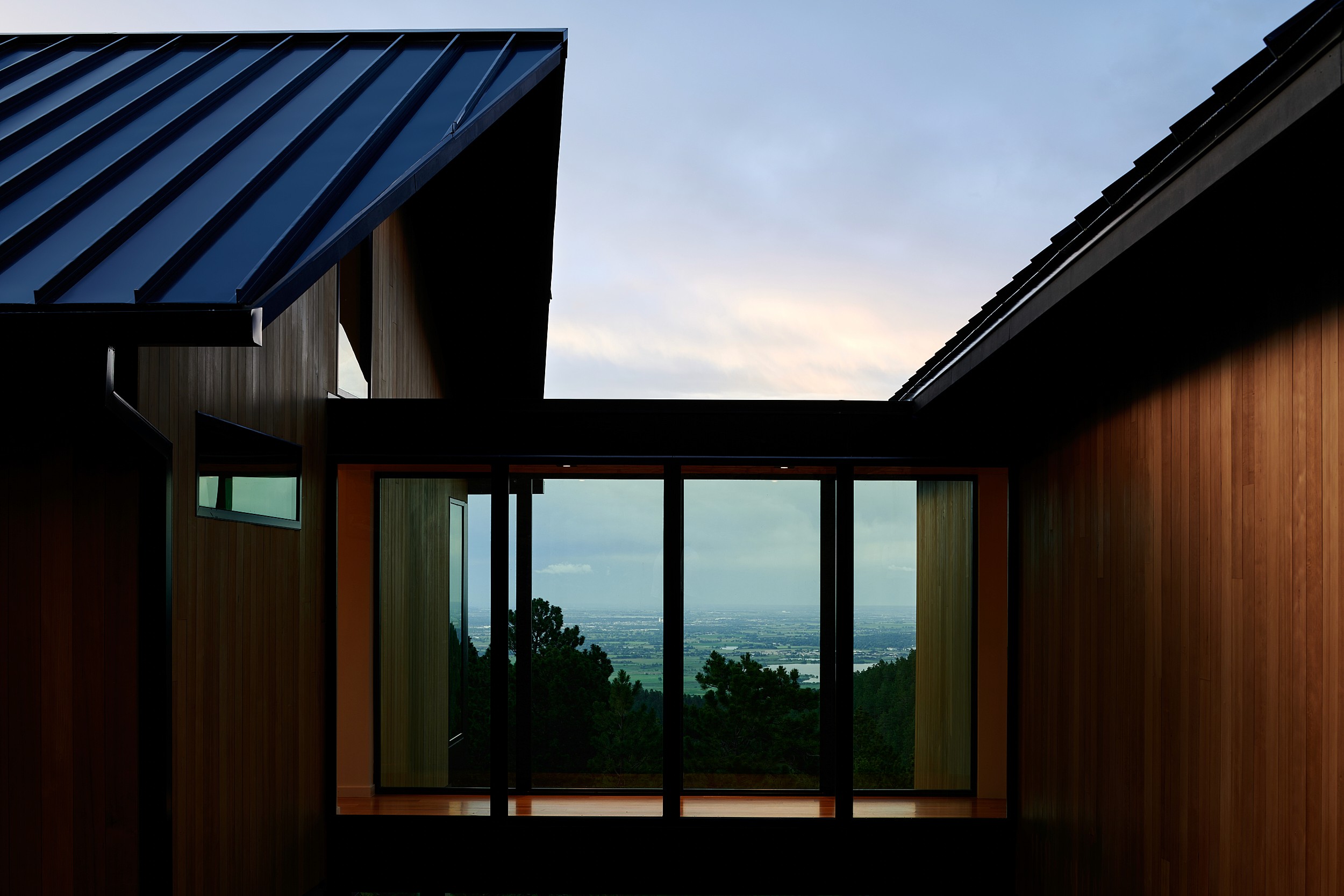
For the Pine Tree House, we used a glass bridge to connect the existing house to a new primary suite addition. The bridge is 10’ long and fully exposed on both sides by large expanses of glass. Because it’s suspended between the existing portion of the home and the new bedroom addition, the structures frame an impressive view of the front range plains to the east and a more intimate view of the forest to the west. It makes you feel like you’re outside when traversing from the main house to the primary bedroom. A moment of pause to appreciate the natural setting.
The expected approach to this remodel would have been to shove the addition up against the existing house and simply have a door into the new bedroom. Instead, we created a special moment that you’ll appreciate every time you walk across the void. A simple move that will force you to notice your surroundings every morning when you start your day.
2. Natural Light
Closely related to a connection to nature, natural light has huge impacts on how we feel. Limited access to natural light can cause depression, less motivation, and a feeling of dread. It’s no wonder that they put prisoners in ‘the hole.’ Complete darkness is the ultimate form of punishment.
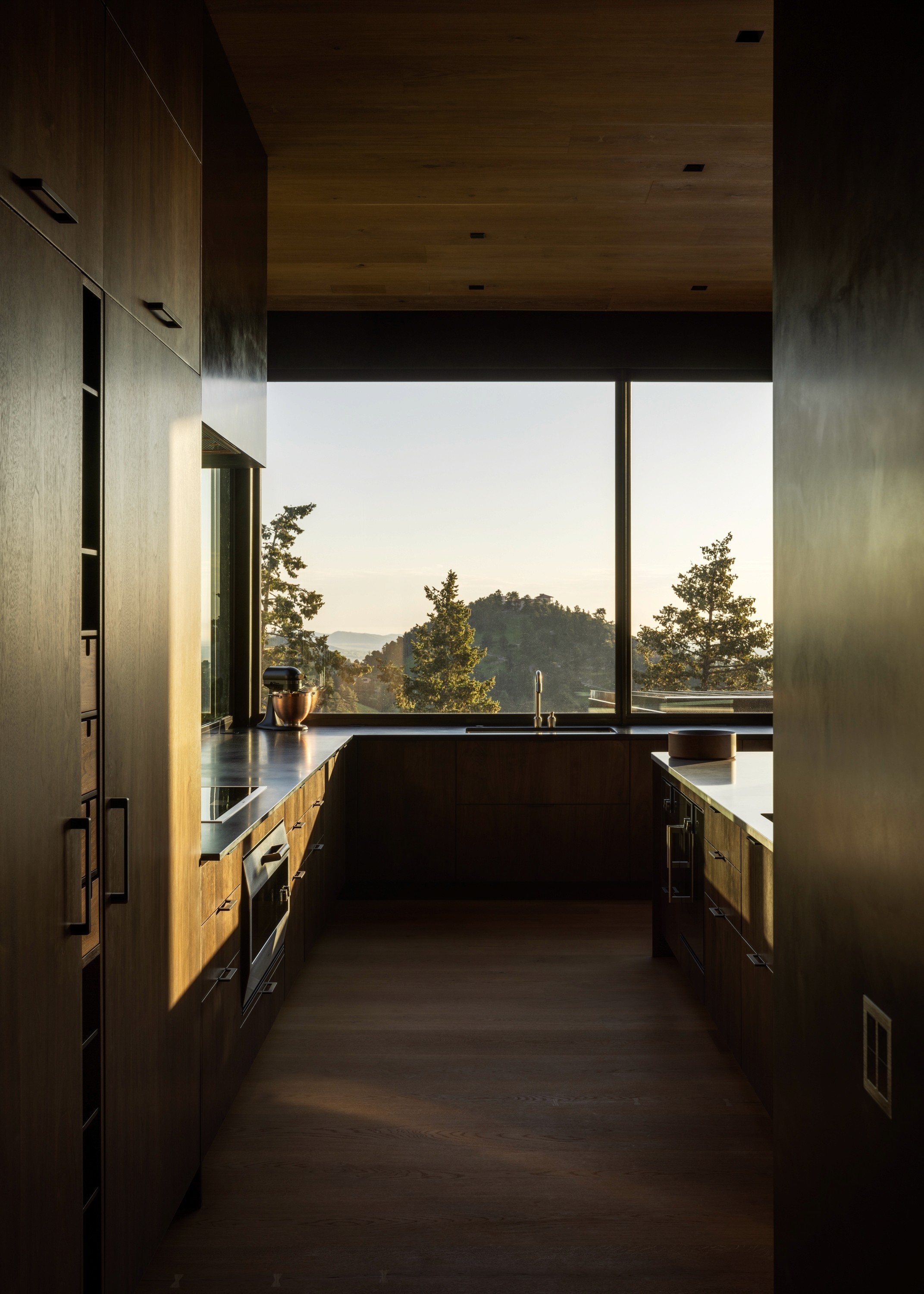
We use a nuanced approach when thinking about lighting spaces with natural light. Colorado affords an intense light quality that needs to be controlled, or it will feel overbearing. At the High View House we contrasted larger spaces flooded in natural light with smaller spaces closed off from abundance amounts of light. As you move through the home you constantly transition from dark to light, open and enclosed. The light spaces are exposed, open to expansive views, and give you the opportunity to experience the full spectrum of the Colorado environment. The more enclosed spaces are nestled in, protected, and allow you to recede back into the forest. The dark spaces make the light spaces feel even more airy. The light spaces make the dark spaces feel more guarded.
This play between dark and light allows you to organize your lifestyle around a light quality that suits different needs. The living room and kitchen are more active, suitable for a connection to the outside world and an abundance of direct light. A bedroom is more private, a place to settle into the woods for shelter and comfort. A darker space suits this need better.
3. Natural Materials
The materials we use inside our homes have a direct effect on our emotions. Natural woods can make you feel warm and cozy. Quarried stone can give you a feeling of stability and protection. Natural materials have a feel, a smell, and they age gracefully with time. They embody a timeless quality that ties a home to its surroundings.
Unfortunately, modern homes have followed a trend of stark, white spaces lacking texture and warmth. This is an aesthetic that has blemished the idea of a ‘modern’ home and created a hurtle for designers and architects that design modern spaces, but with warmth and character. We fall into this category. We only design modern homes, but are committed to using materials that make a space feel warm, lived in, and show personality.
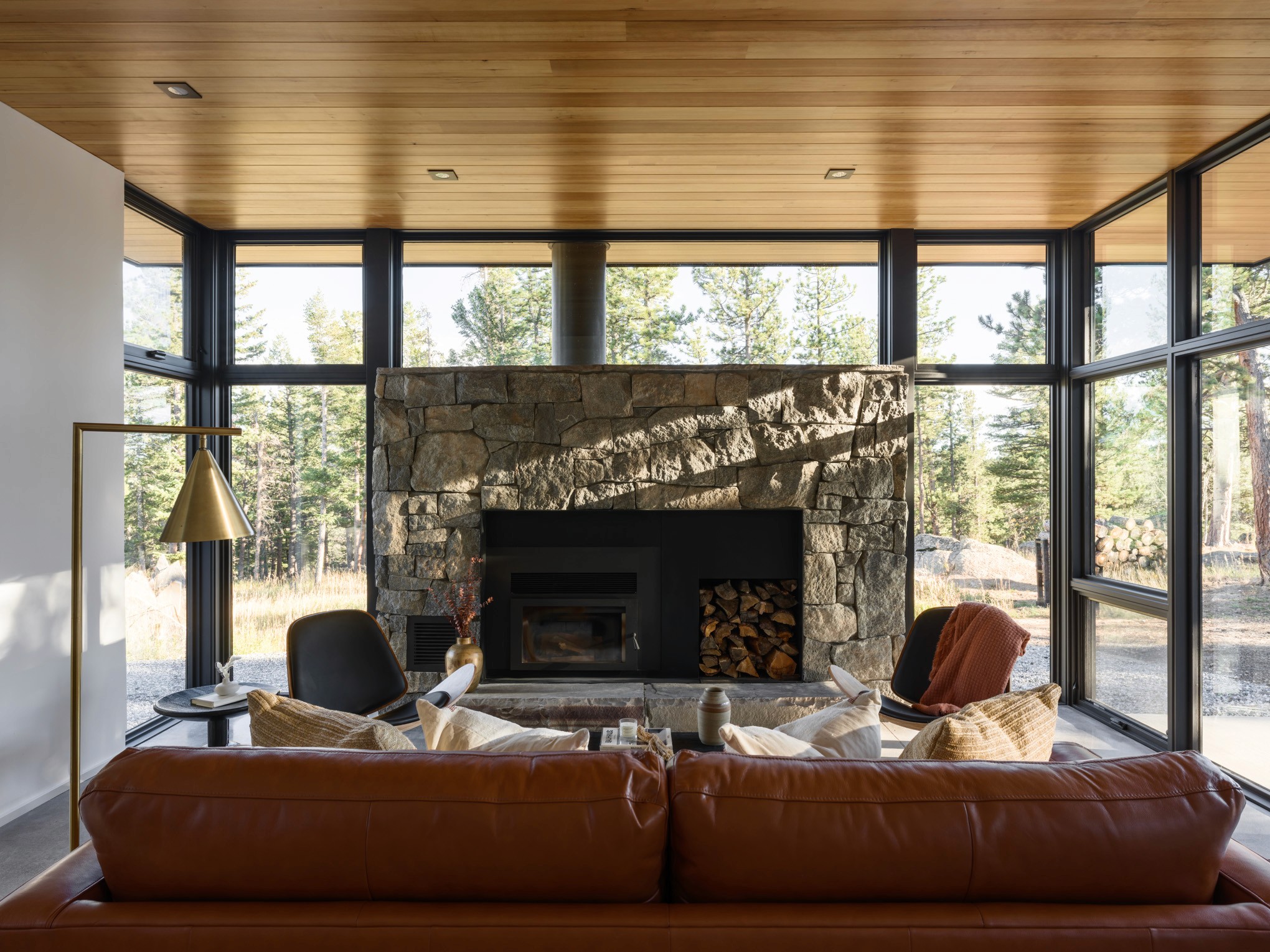
At the Lynx Cabin we used hemlock ceilings, locally quarried granite stacked stone, and pigmented concrete floors. The stone and concrete are tied to the site’s granite bedrock. The color and texture match the surrounding outcroppings and create a relationship with the outside. Contrasting these hard, cold materials are the wood ceilings. The ceilings are designed as planes that float over the living spaces creating a ‘nestled feel’ in an otherwise harsh mountain environment. It’s the perfect place to sit at the stone hearth with a raging fire as a storm blows in over the divide.
These are just a few examples of how we approach wellness in the design of living spaces. At the heart of it all is a deep connection to nature. Whether through direct access to the outdoors, the intentional use of natural light, or materials and textures inspired by the surrounding landscape, each element helps ground the home in its environment.
Our goal is to create spaces that invite contemplation, foster relaxation, and nurture meaningful connection with family and friends. Ultimately, we hope these environments inspire a life lived more fully, beyond the glow of our screens and more present in the moments that truly matter.
‘till next time,
Colin

Hey There! I'm Colin, a partner and architect at FOLLOW Architecture. I write about how the design of our living spaces can improve our lives.